“The test of faith is whether I can make space for difference, whether I can make space for the Other.” — Rabbi Jonathan Sacks
As the High Holiday season approaches, many of us begin the work of cheshbon hanefesh: a personal accounting of the soul. Not just what we did wrong and how to fix it, but a deeper, more uncomfortable reckoning with who we are, how we move through the world, and the gap between our values and our actions. The tradition gives us a precise sequence for this work: first look honestly at where you fell short, then confess it, then commit to doing differently when the moment comes again. Simple in structure. Genuinely hard in practice.
This year, I want to take a hard look at one specific area. Not the obvious failures, but the quiet moments of inaction: the times we didn’t say something; the spaces we didn’t make; the people we didn’t welcome. The viduy, the confessional prayer we recite on Yom Kippur, offers a useful structure for this accounting. It doesn’t ask us to confess only the dramatic sins. It moves methodically through moments of ordinary life. For those of us who are trying our best, who mean well – who consider ourselves allies – that granularity is exactly what is needed. Many of our failures of inclusion don’t come from malice, but out of habit, comfort, or an unexamined assumption that our communities were already welcoming enough.
Al chet shechatanu lefanecha b’immutz halev. For the sin of hardening our hearts.
The times a parent in our community made an offhand comment about “those families” and we let it pass. The times we heard that a teenager was struggling, and assumed someone else was handling it.
Al chet shechatanu lefanecha b’sinat chinam. For the sin of baseless exclusion.
The school that quietly discouraged families with LGBTQ+ members from enrolling. The shul that has never explicitly said anyone was unwelcome, but whose culture made abundantly clear who belongs and who is merely tolerated. The Shabbos table that never had quite enough room.
Al chet shechatanu lefanecha b’dibur peh. For the sin of speech.
The joke that went unchallenged. The rabbi whose remarks went unchecked. The conversation where we nodded along rather than said, simply and clearly: that’s not how we talk about people in this community.
Al chet shechatanu lefanecha bekalut rosh. For the sin of taking things too lightly.
The programming budget that never found room for an inclusion initiative. The school policy that was never considered. The committee that never thought to ask who wasn’t in the room, and whose needs weren’t being met.
This cheshbon is uncomfortable precisely because we all fall short sometimes. We don’t fail to live up to our values because we are bad people – we fail because we are only human. We too easily get caught up in our own lives and lose sight of the needs of others. But we are all equally valuable in God’s eyes.
In his book, the Dignity of Difference, Rabbi Jonathan Sacks writes about kavod, the human dignity conferred on each individual, made in the Divine image. The mishna in Sanhedrin relates that when a human being stamps a coin, each one comes out identical, but the Almighty created every person and yet none of them are alike. This difference, this connection to God, makes every human being precious, and confers on us the responsibility to treat one another with dignity.
Rabbi Sacks taught that the true test of faith is whether we can make space for difference. Not merely tolerate it, not accommodate it reluctantly at the margins, but embracing it as a beautiful expression of God’s abundance. Inclusion is not merely a political position or community amenity, but an article of faith. If we believe that every person is created b’tzelem Elokim, in the image of God, then the work of making space is a theological imperative.
Living up to these ideals, in the day to day mess of a community – kiddush conversations, committee meetings, Shabbat and holiday routines – is a high bar. More often than not we fall back on what is easy, on our existing habits. Elul provides us an opportunity to stop and take stock of our actions – to try to break the cycle.
Taking a cheshbon hanefesh is only the beginning. The Rambam teaches that teshuvah is not complete until we find ourselves in the same situation and make a different choice. Regret without changed behavior is not teshuvah. It is just guilt with good intentions. The final step is to transform our account into action. We have to actually do something differently the next time we hear an unkind comment, the next time a family needs an advocate, the next time our institution is making a decision about who belongs.
That is exactly what Eshel’s Allies Training initiative is designed for. Not to tell us what to believe, but to give us the concrete skills to live out our values: how to intervene in a difficult moment, how to advocate within our institutions, how to show up consistently in ways that work for us and our communities. The beginning of the year, whether academic or spiritual, is when the structures and routines that inhibit or foster belonging are set. As a new year begins and our communities reconvene, we have a chance to make different choices.
Teshuvah requires a next time. Eshel’s work with educators, Rabbis, leaders, and allies to pave the way for a better, more inclusive future. Our tradition gives us the framework: look honestly, confess specifically, commit to doing differently. The rest is up to us.
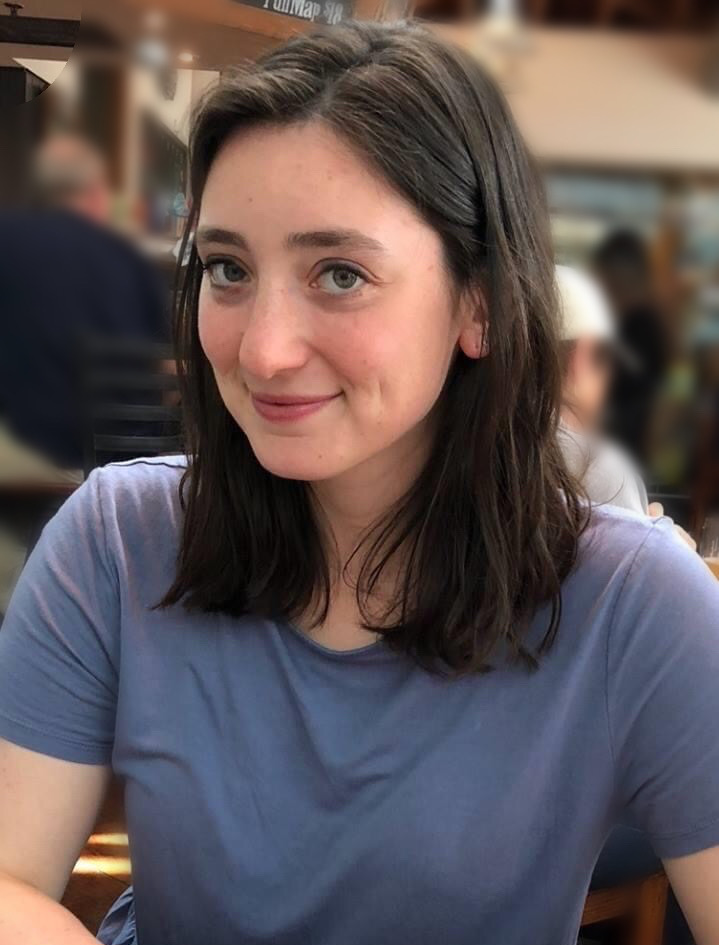 Meira Davidowitz
Chief of Staff