
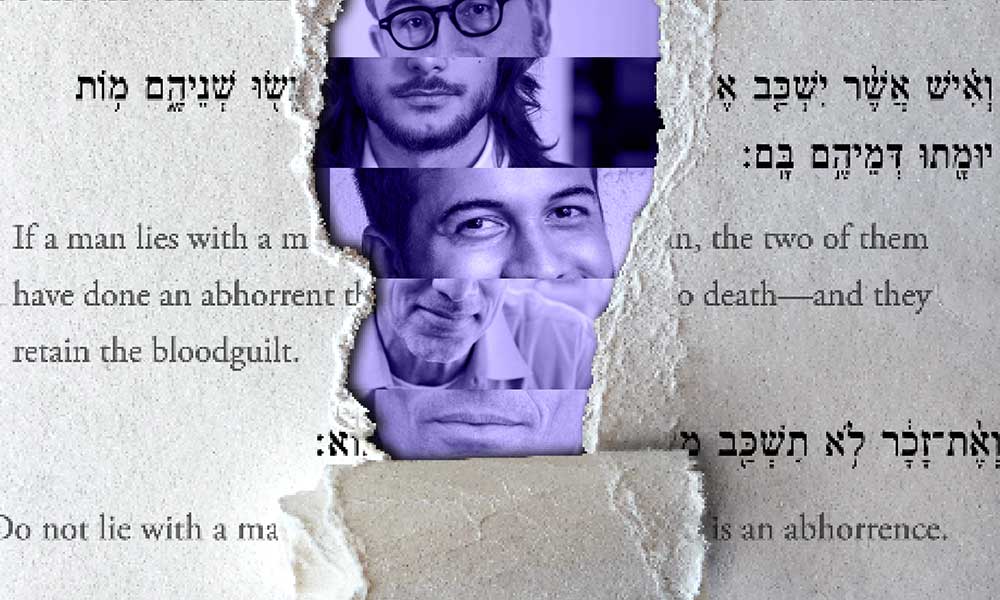
by Nadine Epstein
As a teenager in West Hempstead, NY, on Long Island, Oliver Paneth loved spending time at their family’s shul and was a popular babysitter in the Orthodox community. They also attended Yeshiva University High School for Girls in Queens. “I was never the girlie girl, I was way more into sports,” recalls Paneth, whose gentle round face is fringed with a wispy brown beard. “I thought I was gay, and that was what was different about me, and then I went to college and met other trans people. Before that I didn’t know that being transgender was a possibility. Once I heard their stories, I realized that is how I felt my entire life.”
It was easier for Paneth, now 27, to navigate the heavily Orthodox Jewish hamlet of West Hempstead when they identified as a female and a lesbian. Paneth, who uses they/them pronouns, could go to their family’s shul and even participated in a Birthright trip to Israel for religious girls. But once they medically transitioned and developed physical male attributes, they no longer felt welcome. Many people in the community stopped speaking to them. “I thought they were good friends,” says Paneth. “It turned out their friendships were conditional.” Paneth’s few remaining friends from high school are all LGBTQ+ and only one teacher remains in contact with them. “She is one of the sweetest humans alive and she would never want me feeling weird or outcast,” they say.
Fortunately for Paneth, they have come out and transitioned at a time in history when their choices aren’t as limited as they would have been even two decades ago. No longer are the options marrying against their needs and the needs of the person they marry, staying single and celibate or leaving the Orthodox world. Their parents, with whom they live while working at a children’s museum and finishing college, have stood by them. At first it was hard, says Paneth, “but they have come to realize that they haven’t lost their child, although it does mean I won’t be marrying [the kind of] person they had imagined.”
Paneth gives credit to the Jewish organization Eshel for saving their relationship with their parents, who joined one of the organization’s virtual support groups and have attended retreats with other parents of LGBTQ+ teens and adult children. The nonprofit, which focuses on the Orthodox community, also helped Paneth with surgeon contacts, information about fertility and freezing eggs and was more generally a lifeline, “because a lot of times, especially within the [Orthodox] Jewish community, when you are coming out, you don’t have many places to reach out to.” Jewish Queer Youth (JQY), an organization founded by a group of Yeshiva University students offering support and mental health services to queer teens and young adults in the Orthodox, Hasidic and Sephardic communities, also provided Paneth with invaluable resources. “There are so many LGBTQ+ people we work with who want to remain Orthodox but do not have a place where they can do that and live fully and belong,” says Miryam Kabakov, Eshel’s co-founder and longtime executive director.