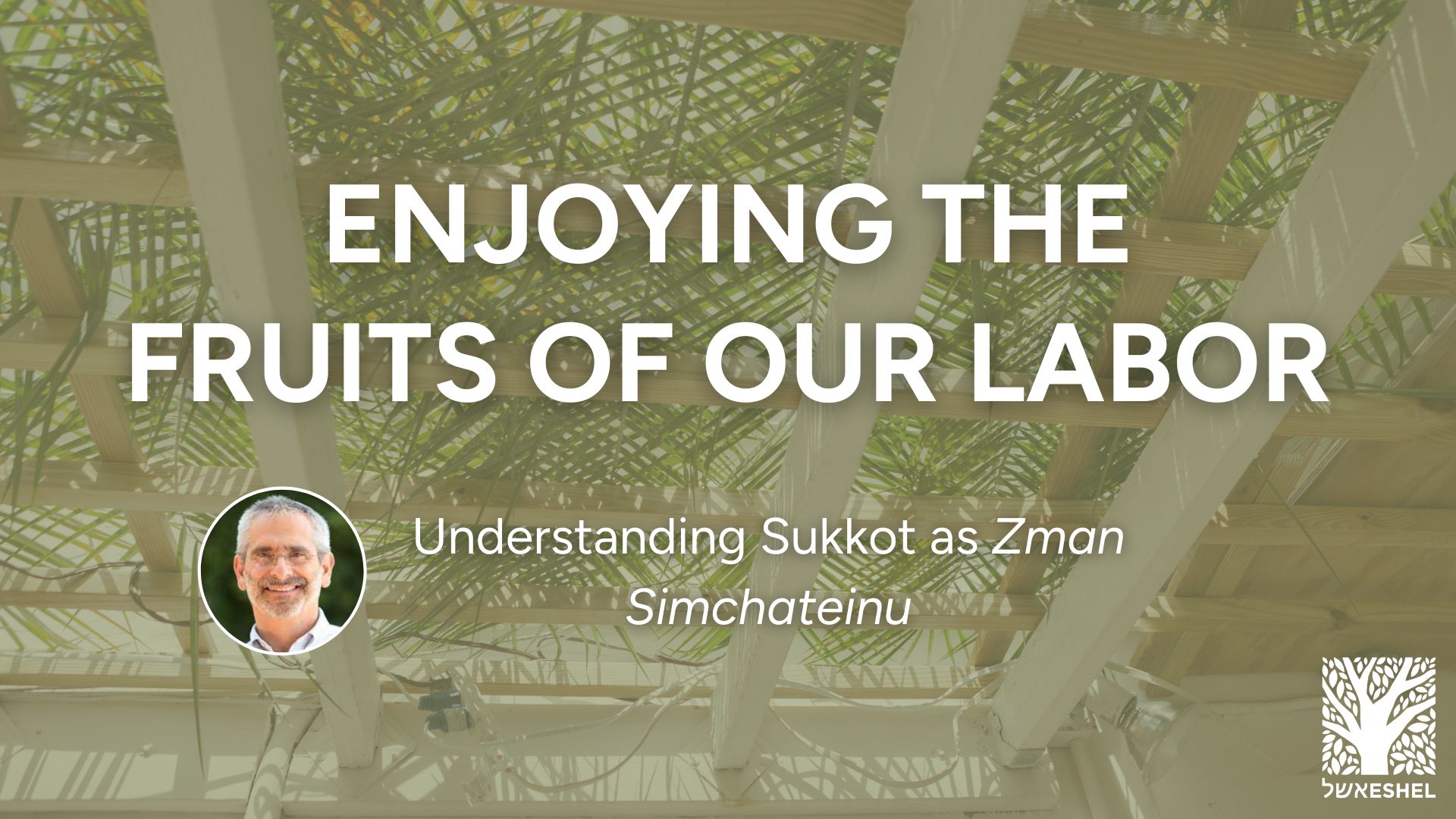
While we often include Sukkot in the trio of pilgrimage festivals, Sukkot is really best understood as the last act of the high holidays. After we have examined ourselves, identified and committed to improving our shortcomings, it would be too easy for us to slip back into old habits as soon as we returned to our daily routines. Instead, we are instructed to turn our lives upside down physically, instead of spiritually. Building a sukkah and living outside the familiar four walls of our homes helps prevent us from slipping back into our bad behaviors.
Besides just disrupting our normal way of life, Sukkot offers a generative opportunity. It allows us to conceive of new possibilities, new ways of being and doing, that are beyond our imagination the rest of the year.
Sukkot has the power to move us with a deep gratitude for life. It helps us reconnect with family and friends, while enjoying good food, the smell of cut branches, and fresh air under a canopy of leaves and stars. While Rosh Hashanah and Yom Kippur are defined by regret, confession, judgment, and the need to wake ourselves up, Sukkot is a holiday devoted to our connections to the natural world, to our family and friends. The tonic of Rosh Hashana and Yom Kippur surely motivates change, but it is the exuberance of Sukkot that makes it sweet. Having put in the work to improve ourselves, to beg to be heard by our Creator, on Sukkot, we get to enjoy the fruits of our labor.
Working on our self-improvement requires the difficult, confronting steps of Rosh Hashana and Yom Kippur – but those changes are only sustainable when they are nourished by gratitude, connection, and joy.
 Rabbi Steve Greenberg