

Leaders and Educators:
Getting Started
Creating a Positive Environment
It’s likely that at least one student, camper, congregant, or participant in your class or group identifies as LGBTQ+. Research suggests that approximately 7-10% of the population identify as LGBTQ+, and up to 26% of high schoolers. Many adolescents are recognizing and openly sharing their identities at younger ages.
When working with groups:
- Remember the likelihood is high that an LGBTQ+ individual is present, even if you are not aware of them.
- Be mindful of language – using inclusive terms can help everyone feel welcome.
- Avoid any derogatory terms or stereotypes.
- Show sensitivity when teaching Torah texts that might be hurtful to LGBTQ+ individuals or that might make someone feel excluded.
As educators and leaders, you play a vital role in shaping the culture and norms of your community.
Your commitment to inclusivity helps model values of acceptance and compassion. The way you communicate what is and is not acceptable can greatly influence how comfortable individuals feel, in a space where they may feel alone. Additionally, addressing bullying and promoting a culture where LGBTQ+ individuals are valued will have positive effects on mental health. When individuals, whether students, campers, or congregants, feel marginalized, having a supportive leader can boost their confidence and well-being.
Torah Judaism values every individual and emphasizes the importance of caring for one another.
The Torah mandates that we must not embarrass others, use names they don’t prefer, or threaten anyone’s safety.
As a Jewish leader, fostering an environment that values and affirms the worth of each individual will encourage inclusion and signal to LGBTQ+ individuals that they, too, have a place in Judaism.
When Someone Comes Out
Your students/campers/congregants may come out to you. When someone shares this information with you, they’re showing trust and vulnerability, so it’s important to acknowledge their courage by thanking them for sharing with you and trusting you. Know that you don’t have to have all the right answers in the moment, and you can always continue to research, reach out to ask questions, and follow up with them.
You might want to:
- Maintain a calm and neutral demeanor.
- Reassure them that this doesn’t change your relationship and that you’re there to support them.
- Ask how you can be supportive and respectful in this moment.
- Ask if they’d like you to keep this information private.
- Ask if they would like help finding additional resources, like those on Eshel’s resources page.
You can also:
- Share that this might be new for you, and you might need some time to reflect.
- Ask thoughtful, non-intrusive questions about their journey.
However, it’s best to avoid:
- Questioning their certainty or honesty about their identity.
- Implying they’ve hidden their identity until now.
- Expressing surprise or making assumptions.
- Commenting negatively or bringing up stereotypes related to their identity.
- Discussing halachic concerns, unless the individual expresses a desire to do so. It’s best to focus on the emotional, pastoral, and communal needs first and to follow the individual’s lead.
Demonstrating Your Acceptance
You can proactively show that you are LGBTQ+ friendly and approachable.
Creating a habit of using inclusive language is key. This helps affirm that LGBTQ+ individuals are welcome in your space. Consistency in your approach fosters a sense of safety that goes beyond single comments or gestures.
Examples of Inclusive Language:
- Use gender-neutral terms like “spouse” or “partner” when discussing relationships.
- Talk openly about LGBTQ+ individuals in your community to promote a welcoming environment.
- Include pronouns in your email or Zoom signatures to signal to others that you recognize, like the Mishna in Bikkurim 4 does, that gender has many layers.
Consider displaying items that signify support, such as LGBTQ+ supportive stickers or books.
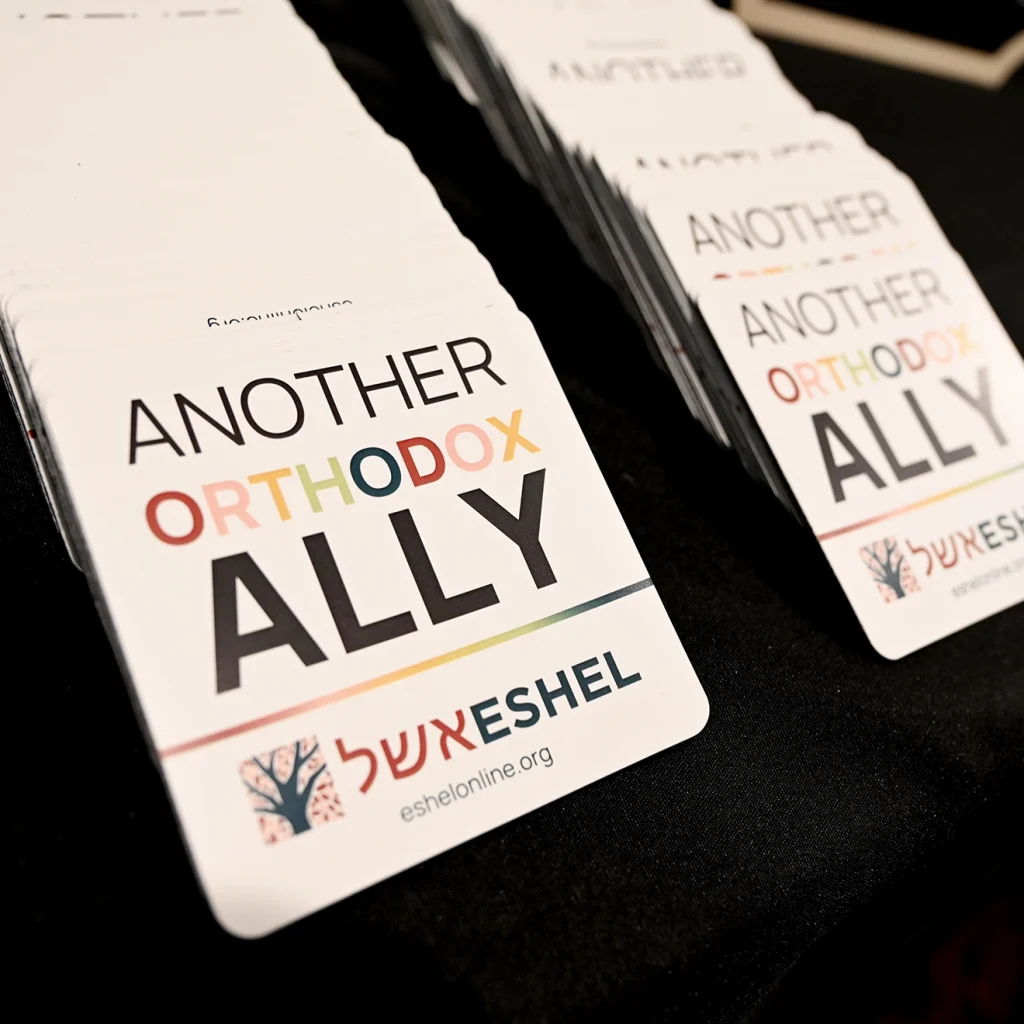
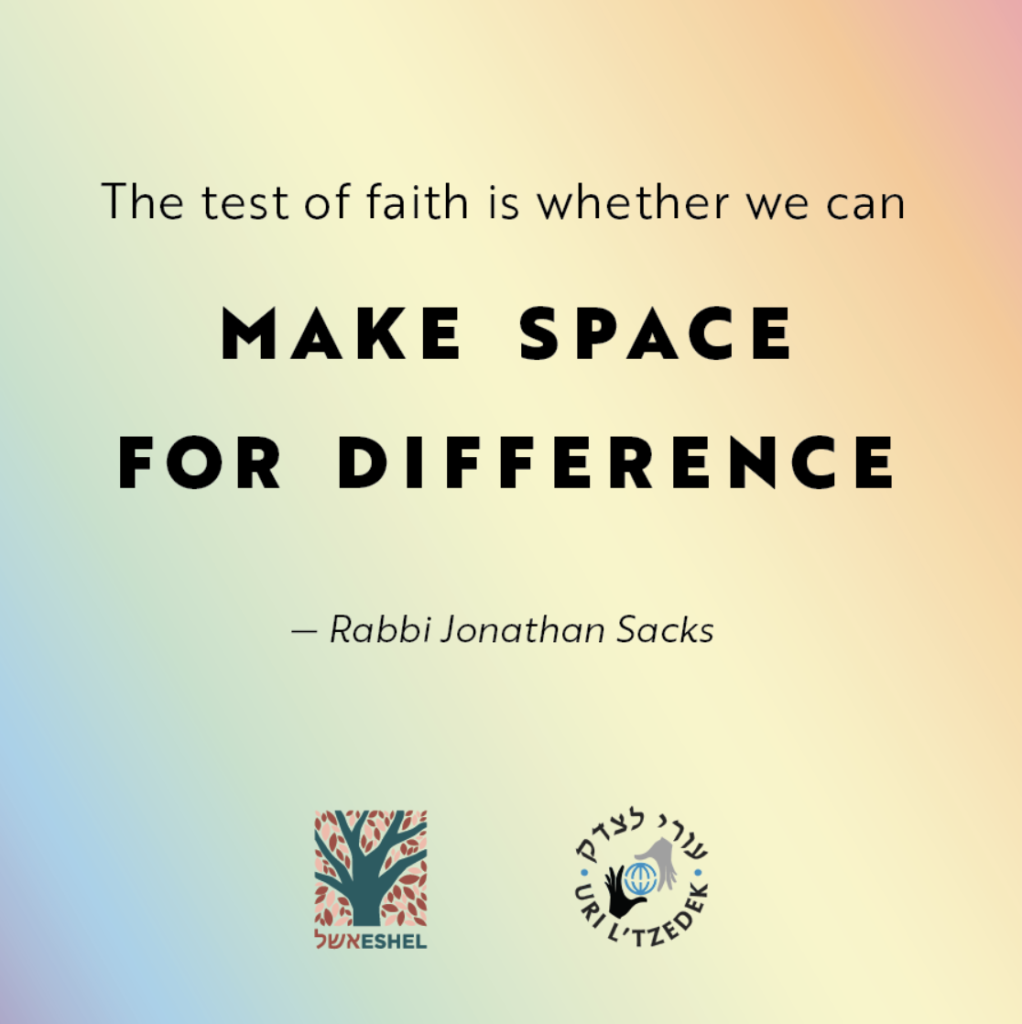
What inclusion looks like is different in every environment.
Eshel is committed to working with institutions and leaders to find creative and impactful ways to care for LGBTQ+ students/campers/congregants. Reach out to Dr. Sunnie Epstein, director of our Welcoming Shuls & Schools Projects, to explore what can work for you and your institution. Eshel works with leaders and educators in many ways, including to advance inclusion at their institutions and to provide counseling around specific cases.
Eshel is here for you.
Check out Eshel’s Welcoming Schools/Camps Project and our Resource Library for additional support. Click here to contact Dr. Sunnie Epstein for further guidance regarding your specific needs.